
Stubble Burning Smoke Under 2%, Vehicles Now Delhi’s Biggest Polluters: Experts
In an exclusive interview with CNN-News18, Anumita Roychowdhury, Executive Director, Centre for Science & Environment (CSE), New Delhi, pointed to the city’s local combustion sources are contributing to the air pollution not just in the wintertime, but year-round.

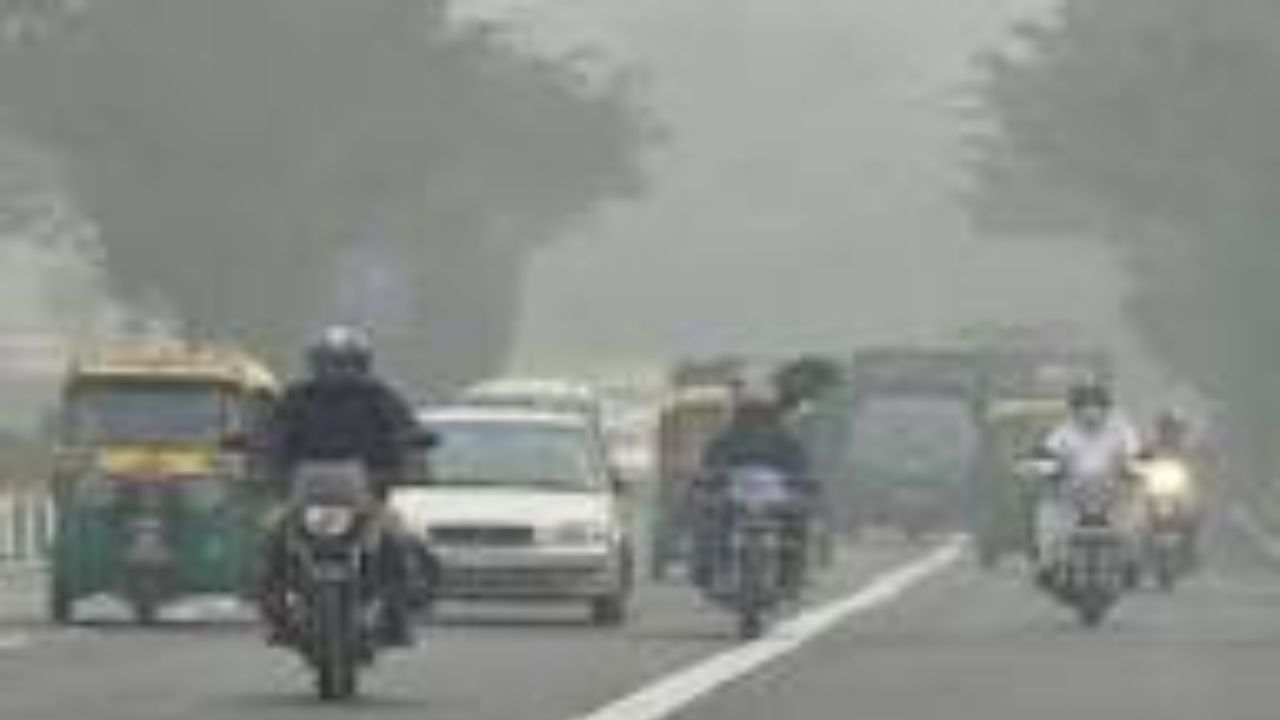
Stubble Burning Smoke Under 2%, Vehicles Now Delhi’s Biggest Polluters: Even as stubble burning and firecrackers remain under intense scrutiny, experts point to the city’s rising vehicle pollution as the driver for almost 40 percent of the capital’s bad air; meanwhile the national capital remained blanketed in bad hazy air where the Air Quality Index (AQI) remains ‘very poor’ throughout.
In an exclusive interview with CNN-News18, Anumita Roychowdhury, Executive Director, Centre for Science & Environment (CSE), New Delhi, pointed to the city’s local combustion sources are contributing to the air pollution not just in the wintertime, but year-round.
Also Read: White House Flags Loopholes After California Road Crash: ‘Criminal Aliens Issued Licenses’
“It is so clear, and we know this so well from detailed studies in the past, that combustion sources – industries, vehicles, open waste burning are major contributors to Delhi-NCR’s pollution. Even though, quite a substantive part of pollution comes from surrounding areas, but in terms of local sources, vehicles are at the top – responsible for almost half of the total pollution load," said Roychowdhury who has also worked extensively to build the campaign on Right to Clean Air.
The directive information was also revealed as Roychowdhury pointed out the daily estimate of contribution from the different sources to Delhi’s ambient air pollution provided by Indian Institute of Tropical Meteorology (IITM) Pune, which reported a significantly low contribution of farm fires to Delhi’s PM2.5 concentration this year. “It gives clear insights on how contribution of farm fires to Delhi’s pollution has been around 1-2 per cent this time, yet the pollution levels rose. Diwali is also over now, but the air quality is still bad. We have been tracking the AQI since the first week of October, and it has been steadily increasing. So, when the city’s local sources have such an overpowering impact on the pollution levels, then why this blame game," she remarked.
According to experts, while the annual PM2.5 concentration within Delhi showed a marginal downwards decadal trend during the past decades, pollution levels still remain far from the national clean air standard, and even more so than WHO standards. “There was a noticeable downward trend, especially after 2021 when we saw a little bit of dip, but it shot up again last year. Clearly, we are unable to hold on to the gains we made in the past. Moreover, the air residents breathe year-round is so toxic, that Delhi needs more than 60 per cent reduction in ambient air pollution to meet its own annual clean air standards," highlighted Roy Chaudhury.
Also Read: Chhath Puja 2025: Auspicious Fruits To Offer And Their Spiritual Significance
A recent review from a think tank located in New Delhi also raised an issue about focusing too much on dust pollution while ignoring other significant sources. Experts said that if dust pollution needs to be reduced, the reality is that dust is decreased in winter. “Of the total pollution, around 50 per cent are vehicles, while the rest is contributed by industries, open waste burning, and dust. Yet, instead of targeting these major sources, every winter we see a focus only on dust mitigation – roads sweeping, water sprinkling water, and even artificial rain. Where is the action on key polluters? Where is the scale and the stringency needed to truly control this pollution," she remarked.
A toxic haze continued to cover the national capital, days after Diwali, with a daily Air Quality Index (AQI) settling at under ‘very poor’ levels. The bursting of firecrackers continued on Thursday, even with the restrictions, and data indicated that the restricted use of green firecrackers allowed by the Supreme Court is probably not having much difference. The PM 2.5 levels stayed elevated, as seen with the increase during and following Diwali on 21 October – rising from 156 µg/m³ prior to the festivities to 233.5 µg/m³ while the festivities took place and continuing to rise post-Diwali to 305.
Meanwhile, the latest satellite data from the Indian Agricultural Research Institute (IARI) shows that the number of farm fire counts recorded in Punjab has decreased from 1,638 last year to 512 so far this year! 98 fire counts were recorded on Thursday, with 43 from Rajasthan and 28 from Punjab. Overall, of the total 2017 fire count this season, Uttar Pradesh recorded 717 fires, followed by Punjab (512) and Madhya Pradesh (392 fires) - and this is a marked reduction compared to last year.
Also Read: Farah Khan Hugs Malaika Arora, Karan Johar Tells Her ‘I Love You’ On 50th Birthday
For breaking news and live news updates, like us on Facebook or follow us on Twitter and Instagram. Read more on Latest National News on The National Bulletin
