
Gurugram’s Senior Living Market Expands as Wealthy Retirees and NRIs Fuel Demand
Gurugram's senior living projects are proving to draw in NRI investors, repeat buyers and executives looking for retirement options, along with those with a long-term investment perspective.

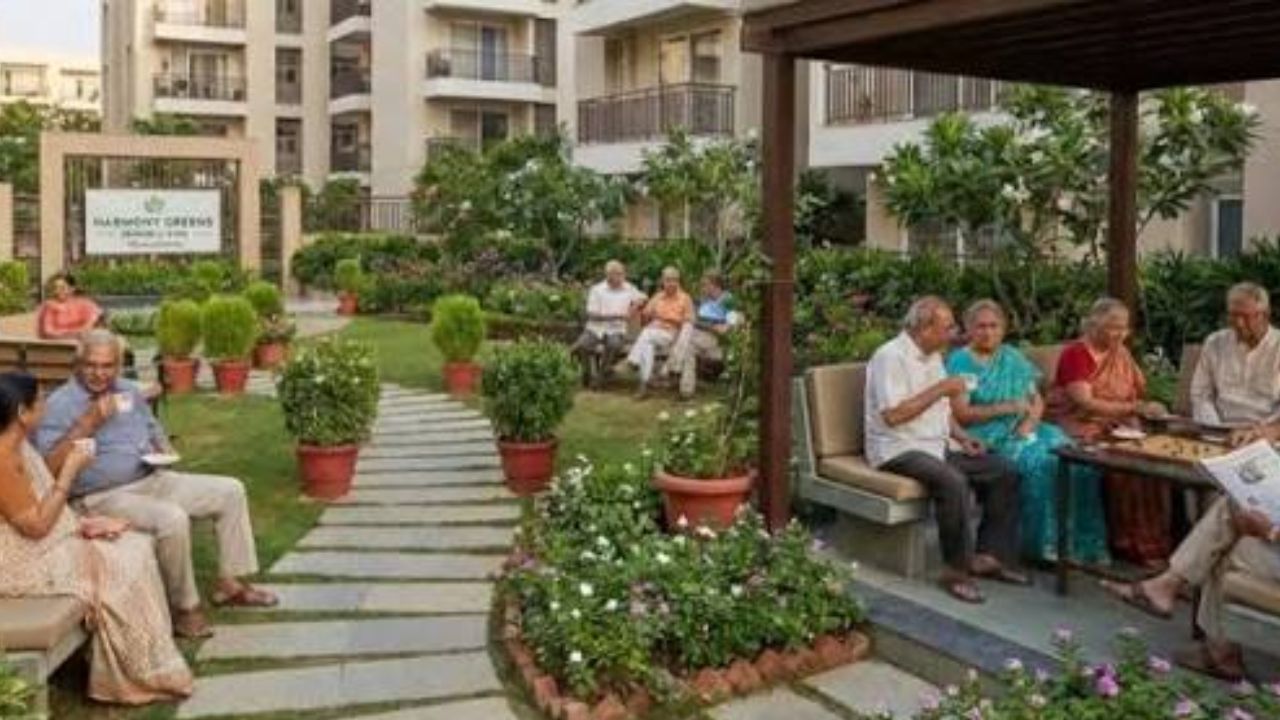
Although markets in the south, like Chennai, Coimbatore and Bengaluru, represent almost 60% of the senior living market in India, the area is starting to attract interest in northern markets too, with over 20,000 units currently available in the country. The market is nearly 20% in North India; West is 16% and the East is about 4%. Senior living has become an important market in Gurugram, and luxury and premium offerings are leading the market.
The market consists of well-heeled retirees, former corporate executives, entrepreneurs and high-net-worth people who want their own living arrangement, but don't want to sacrifice on space, privacy, amenities or access to health care. Another critical group of buyers are Non-resident Indians (NRIs) who intend to come back to India after their retirement.
Earlier in the month, DLF had sold ₹1,985 crore worth of sales in its luxury retirement project, Aureva. Meanwhile, Signature Global is collaborating with South India's senior-living operator Manasum for a project of 164 units, and Krisumi Corporation is getting ready to enter the market.
Also Read: Australia to Take Legal Action Against Facebook and TikTok Over Under-16 Social Media Ban Violations
So, who's purchasing senior living homes?
The buyer profile isn't limited to a retired client who wants to move in right away. Customers who are returning to developers, NRIs and senior executives who have plans to retire early are becoming key segments. Some purchasers are buying homes for their own use and others are buying houses to provide professionally managed accommodation for their aging parents.
They occupy a middle ground between the end user and investor and are influenced by long-term living requirements, confidence in the developer and access to good management and care skills.
“Senior living is not just about the infrastructure, it is also about how the community is being managed and maintained by the trusted developer with a long-term perspective – the NRI, and the end user who invests in the project, are essentially two types of buyers,” added Shveta Jain, MD and head of Residential Services at Savills India.
Real estate developers queue-up new offerings
DLF on October 4 had announced the sale of ₹1,985 crore from 172 units of the project situated in Sector 63, Gurugram. In an investor's call on October 18, the group CFO Badal Bagri added that the project had got a positive response and was fully subscribed.
We introduced Aureva, the luxury retirement housing address, and it was a very positive launch, and we had a sellout,” she said.
According to quotes, Aureva's managing director, chief business officer Aakash Ohri said that 25% of the buyers were NRIs for Aureva. Of the remaining Indian buyers, 65% were from Delhi-NCR and 10% from other parts of the country.
The sellout has come at a time when other developers are planning to join the segment.
Signature Global has tied up with Manasum Senior Living to build Manasum Varishta at Signature Global Sarvam, DXP Estates in Sector 37D, Gurugram. The 164 unit project is Manasum's foray into the Delhi-NCR market with an estimated sales potential of ₹575 crore. The project will feature three-bedroom apartments in two variants of sizes of 1,815 sq ft and 1,840 sq ft and is expected to cost around ₹3.7 crore per unit.
Senior living is more complex than a traditional residential approach and needs specialized design, safety and operational characteristics, says Pradeep Aggarwal, founder/chairman, Signature Global (India).
He said that “During the last few years, the home buyers in India have dramatically changed their preferences towards lifestyle-enabling environment which incorporates long-term wellness, dignity and specialised care,” and the firm was considering how to incorporate specific care solutions into its master planned developments.
Indo-Japanese real estate joint venture Krisumi Corp is also developing a senior living product that will focus on health, wellness and age-related diseases such as arthritis and dementia. The concept has been haunting Chairman Ashok Kapur for two decades now, and the company is now geared up to move on with the concept, he said recently. There have been media reports as well of a proposed collaboration with the Temari Group of Japan for a project at Gurugram.
The opportunity is available in all metros
The interest in senior living doesn't just apply to the National Capital Region. Developers are also considering markets where gentler land values and existing communities and healthcare facilities may provide opportunities for retirement communities.
Hiranandani Communities has jumped into the area with its ₹300-crore senior living project at Hiranandani Parks in Oragadam, Chennai. The development will be spread over an area of one million sq ft which will have two bedroom homes ranging from ₹60 lakh.
Mumbai headquartered Keystone Realtors, part of the Rustomjee Group, has said it is looking to expand to Tier-2 cities as well with plans for senior living and even plotted development projects.
A Square Yards report, Expanding Horizons: The Next Growth Markets for Senior Living in India, estimates that the senior housing market in India will hit $4.31 billion by 2026. Along with Bengaluru, Hyderabad, Pune and Chennai, other cities like Coimbatore, Vadodara, Nashik, Kochi and Mysuru are making headlines as well. Some spiritual destinations are also becoming potential areas for retirement and second homes, such as Ayodhya, Varanasi, Haridwar and Tirupati.
According to another report, The Future of Ageing and Longevity Economy in India, 2026, prepared by Colliers India, the cities of Coimbatore, Kochi, Mysuru and Visakhapatnam in the south and Jaipur, Chandigarh, Mohali, Panchkula and Dehradun in the north are emerging as Tier-2 markets. Goa, Bhubaneswar, Siliguri, Guwahati, Indore and Nagpur are among the other potential destinations. The report outlines a transition away from a one-size-fits-all approach in the sector towards an integrated longevity ecosystem, including housing, healthcare, hospitality and community living.
A wide range of levels of care available from lifestyle housing to specialised care
Whether developers can break into the assisted living, healthcare and ongoing care markets, in a way that's viable as residents grow older, will be a key determinant in the sector's long-term growth.
“Senior living is a fusion of real estate, wellness and healthcare,” said Jayashree Kurup, an urban affairs strategist and senior living scholar. Many super-luxury projects are being geared towards the NRIs who are coming back to India and looking for a lifestyle community, she added.
The market is definitely showing signs of demand, but is still transitioning from lifestyle offerings to integrated models that feature assisted living and eventually continuing care. Developers are also trying pricing to determine what users will pay for these services, Kurup said.
Policy and regulation will play a key role in the evolution of the market. In Kerala, the problems of the elderly population were taken up by a new policy for the elderly approved by the state Cabinet in February. The policy is designed to ensure their dignity and well-being, promote full participation in society and to build inclusive, equitable and age friendly communities.
The state is also developing legislation that would set up standards and outline the duties of assisted-living facilities, home-care agencies and government operated homes for older people.
For breaking news and live news updates, like us on Facebook or follow us on Twitter and Instagram. Read more on Latest Viral News on The National Bulletin
